



Hello to all the baddies who have LITERALLY JUST CREATED LIFE <3
Today we’re talking about pleasure after giving birth. About time we got into it!
About time we got into this! You’re running on empty and being targeted by content extolling the great joys of parenthood, content that ends up making you think you’re a parent before you’re anything else. Of course you are. But does that have to erase all the other parts of who you are? We’re saying a definite no <3
And we’re going to do it properly, because the subject deserves it. What follows is what we wish someone had told you: what’s happening in your body, what’s common, what warrants an appointment and what genuinely helps.
Disclaimer: we’re neither doctors nor midwives. We formulate intimate essentials products and spend our days talking about them with you, in our shops and elsewhere. What follows is what we’ve learnt from those conversations, along with a few facts you can check. For anything medical, your midwife or gynaecologist is still the right person to ask.
Pleasure after giving birth: what changes in your body
Three things happening at once. None is a cause for alarm.
- Oestrogen leaves the room It’s what kept your mucous membranes supple and hydrated. Levels drop after birth, and if you breastfeed, they stay low. The result: thinner, more sensitive, drier tissue. It’s not a malfunction. It’s how the body works.
- Your body has its own timetable Your uterus returning to its usual size, your pelvic floor recovering from all its hard work, a wound healing. It takes weeks, sometimes months, and it doesn’t check your calendar.
- And then there’s everything else... Broken nights. The mental load. That strange feeling of living in a body that doesn’t quite belong to you any more, especially when it’s feeding someone else throughout the length of the day. What we hear most often is this: it’s not that you don’t want to, it’s that you don’t have the headspace to let the desire come.
We’re not saying it works this way for everyone. But we hear it so often that we think it’s worth putting it down in black and white.
The timing, the dryness, the pelvic floor
Six weeks: the number we’ve all misunderstood
Everyone’s heard it. Almost no one’s understood it properly.
Six weeks isn’t when desire comes back. It’s the point by which the tissue has generally healed and the cervix has closed. A medical green light, not a starting whistle.
Officially, French health insurance provides for a postnatal appointment between six and eight weeks after birth, with a midwife, gynaecologist or GP, fully covered. An early postnatal consultation is also provided for between the fourth and eighth week. These appointments are for talking about this too, even if no one ever brings it up first.
And if, six weeks later, you still don’t feel like doing anything? We hear it so often that we want to tell you: there’s nothing to catch up on <3
No one warned you about the dryness
Your oestrogen levels are low, so natural lubrication can be slow to arrive. Even when the desire is very much there. And if you’re breastfeeding, that can last as long as you breastfeed.
Three things really make a difference to everyday comfort.
Moisturise your vulva like the rest of your skin
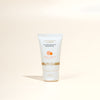
It’s the area we forget about, even though it’s often the first to feel tight and uncomfortable. Our nourishing vulva balm with hyaluronic acid is applied in the evening, outside any sexual context, as part of your skincare routine. Hyaluronic acid retains water in the tissue: exactly what you’re short of right now.
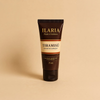
Lube isn’t an admission of failure. That’s the misconception we’d most like to see disappear. A lube doesn’t make up for a lack of desire. It makes up for a lack of oestrogen. Those aren’t the same thing, and it changes everything. Our hyaluronic acid lube hydrates the mucous membranes as it works.
Always use more
The number-one mistake is how much you use. With sensitive tissue, it’s better to apply more twice than not enough once.
The pelvic floor does more than prevent leaks
Pelvic floor rehabilitation is sold to you as insurance against leaks. MMMMh, that’s true, but it’s a very narrow way of looking at it.
The pelvic floor plays a part in sensation, so a pelvic floor that regains its tone doesn’t just mean fewer leaks: it means better sensation. (We were clearly playing a game of how many times we could say “pelvic floor” in one sentence ;) We think it’s a shame no one ever puts it that way.
Pelvic floor rehabilitation generally starts six to eight weeks after birth, with a midwife or physiotherapist. Ten sessions are fully covered. And it’s for everyone, including those who’ve had a caesarean: pregnancy puts strain on the pelvic floor, not just giving birth.
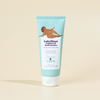
After that, lots of you ask how to keep up the exercises at home. Our Delta Kegel balls come in three progressively heavier weights: start with the lightest for a few minutes a day, then move up when your body is ready. One important point, and we won’t labour it: your midwife or physiotherapist is the one who can tell you whether your pelvic floor is ready. An overly tight pelvic floor needs a different approach from a weakened one.
Pain, starting again, your partner
And what if it hurts?
Some discomfort the first few times, a sensitive scar, soreness that fades: that’s what people describe to us most often, and it generally improves with time and lubrication.
Pain that persists is another matter. We won’t tell you what it means; that’s not our job. What we will tell you is that it calls for an appointment, not patience. Pain that lasts more than a few weeks. A scar that still feels tight. A particular spot that hurts every time. Muscles that tense up as soon as anything gets close. A midwife or gynaecologist can identify what’s going on, and treatment is available.
The one thing we’re absolutely sure of: “it’ll pass” and “just relax” have never solved anything.
While you’re waiting for that appointment, it can’t hurt to cut back on anything irritating. Our aloe vera comfort & hydration lube, the newest addition to the range, was formulated with that in mind: 96% ingredients of natural origin, a pH suited to intimate mucous membranes, hypoallergenic, with aloe vera juice for its soothing and hydrating properties. Compatible with condoms and sex toys, vegan and made in France.
Where to start again (if you want to)
The word “resume” makes us deeply uneasy because it’s so loaded... It implies a return to how things were before, and that’s not at all what people tell us. It’s more about discovering how this body works now. Spoiler: it’s not worse, it’s different and new.
Start on your own, if you prefer Rediscovering your own sensations before being with someone else lets you notice what’s changed without having to talk about it out loud.
Don’t start with penetration
It puts the most strain on the tissue, so it’s rarely the best place to start. Everything else is an option, and everything else counts.
Reach for the lube from the start, not when things get uncomfortable. Getting ahead of it helps you avoid the irritation that makes next time a lot less appealing.
You’re allowed to stop. Partway through, without explaining or apologising. Stopping is better than enduring it: your body remembers the experience, and that matters for what comes next.
Choose realistic moments. 10pm after a day of carrying a baby is ambitious. A Sunday morning while they nap, much less so.
And the person who didn’t give birth?
When there’s a partner, birth doesn’t turn just one person’s body or mind upside down. What people tell us from that side is just as uncomfortable: the desire is there, but so is the fear of getting it wrong. Asking feels like pressure; staying quiet comes across as indifference.
Two things seem to help. Say where you’re at rather than leaving them to guess: “I don’t feel like it tonight, and it’s nothing to do with you” clears up a lot of misunderstandings. And broaden your idea of what counts as time together: a massage, a shower, ten minutes without your phones. Your connection isn’t just about sex, and it’s probably stronger when you stop pretending.
And if you’re raising this child on your own, everything above still applies. Your relationship with your own body isn’t something that takes two.
FAQ
When can you have sex again after giving birth?
When the tissue has healed and when you feel like it. Both, not one or the other. The six weeks are about healing, not le désir. The postnatal check-up, between six and eight weeks, is a good time to ask someone who knows about these things.
Why is it dry after giving birth?
Because the oestrogen that kept your mucous membranes hydrated drops after birth, and breastfeeding keeps it low. It’s physiological. Our take: it has nothing to do with your desire, and a lube directly addresses the problem.
How long does this drop in libido last?
There’s no standard timeframe we can give you, and no one really has one. A few weeks for some, well over a year for others, often for as long as breastfeeding continues. What we can say is that we hear about it every day.
Is it normal for it to hurt?
Temporary discomfort is very common. Pain that lasts more than a few weeks? No: it warrants professional advice. A midwife or gynaecologist can work out what’s going on, and treatment is available.
Can pelvic floor rehabilitation help with pleasure?
The pelvic floor plays a part in sensation, not just bladder control. We think it’s a shame no one ever describes it that way. Ten sessions are fully covered, including for people who’ve had a caesarean.
Can you use lube while breastfeeding?
Yes, and that’s often when it’s most useful. Check two things on the label: a pH suited to intimate mucous membranes and a short ingredients list.
At Love & Care, we formulate clean, simple intimate essentials products made in France. Two of our products are nominated for the European Natural Beauty Awards 2026. And when it comes to medical matters, we’d rather refer you to the professionals.
XOXO, love-filled baddie mamacitas <3

Léa ☁️
I’ve been playing with words on all sorts of subjects for 10 years, and recently turned to sexuality after training with Mathilde Magnien. I’m fascinated by how relationships work, and here we’ll chat openly, inclusively and with a bit of humour too.


